
Two expeditions, one project: The final SWERVE 1 cruise returns with new findings on methane emissions
As the only research project awarded ship time for multiple years through SWERVE, and the last expedition to arrive to port within SWERVE 1 (2024 – 2026), Marcelo Ketzer’s project marks an important milestone for the research infrastructure. Back on land, Ketzer and his team are now heading back to the lab to process, analyse and compare the data from the different years. However, the first findings already reveal significantly lower methane levels in the Bothnian Sea compared to the Baltic Proper. By comparing results from the two cruises, the researchers hope to gain a better understanding of methane cycling and emissions from the seafloor.
You carried out a similar cruise last year. What are you hoping to learn by going to a different location?
The idea is to test whether similar geological conditions, such as different contourites formations in the Baltic Sea, produce similar results in terms of methane cycling and ebullition. This is important to understand because methane eventually reaches the atmosphere and contributes to global warming. Ultimately, the goal is to gain a better understanding of our natural systems.
What has been the most interesting thing you have observed or learned so far during this year’s cruise?
How different the results are, we can see significantly lower methane levels in both the sediments and water in the Bothnian Sea contourite in relation to the ones studied last year in the Baltic Proper. Now we will be investigating the reasons for that difference.
Have you changed anything about your methods or sampling strategy based on what you learned last year?
There are always lessons to be learned from one expedition to the next, it is an ongoing learning process! Since last year's expedition, we have made some improvements to the sampling procedures to make them more efficient.
What does it take to make data collected at sea comparable from one year to another?
It is essential to keep methods and protocols, so they are comparable, from sampling to lab analyses. Having a nice and well nice and experienced crew helps with that!
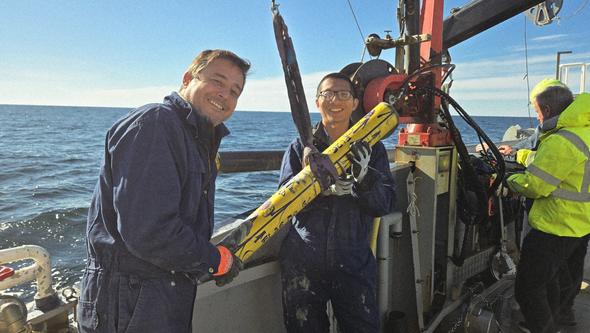
Once you are back on land, what happens to the data and samples you have collected?
Analyses started right after the cruise, but the process takes time. Almost all samples from 2026 cruise have now been analysed. The analyses typically take approximately 2-3 months, and we expect to publish the first results next year!
Can you have any moments from this cruise that made you think, “This is why we do this research”?
All the time! Especially when we see new data that differs from what we expected it to look like. It makes us question our assumptions and that is one of the things which makes it so exciting!
Looking forward, what are the next steps for the The highest bubble streams on record raise questions on methane emissions from the deep Baltic Sea project?
At the moment we are working on analysing the different samples, there are hundreds of them to analyse for different purposes! The data will contribute to a PhD thesis linked to my VR project. We expect to produce four publications from the two cruises, but who knows, other publications may also come!
Read anbout the 2025 expedition here: Uncovering Hidden Methane Emissions in the Baltic Sea | My new site
Project leader: Marcelo Ketzer
Affiliation: Linnaeus University
Research vessel: RV Electra
Topic: Environmental Science/Greenhouse gases in the marine environment.